
What Is an AI Agent? The Comprehensive Guide to Autonomous AI
Artificial intelligence is something we use every day. We mostly see it in things like generative AI and conversational chatbots. Usually these systems only do things when we tell them to. Now we have something new called Agentic AI. If you want to make your work better, you need to know what an AI agent is.
AI agents do not wait for us to tell them what to do all the time. They work on their own to complete the tasks we give them. They can figure out plans and fix problems. Make sure they are doing things right to get to their goals. This guide will tell us what an AI agent is, what it is made of, how it’s different from traditional chatbots, and how agentic AI is changing the world.
What Is an AI Agent?
An AI agent is an autonomous system that works by using an AI to do complex tasks and make logical decisions. They are utilizing the Large Language Models (LLMs), such as Gemini, ChatGPT, or Claude, to help them with reasoning and planning.
The main goal of an AI agent is to help humans achieve complex goals. Unlike traditional AI chatbots, AI agents can do more complex tasks and can do their actions autonomously. While the process for getting the goals, the AI agent will work nonstop and try to resolve the problems continuously. It can learn from their mistakes and make a correction to itself.
What Are the Core Architectures of AI Agents?
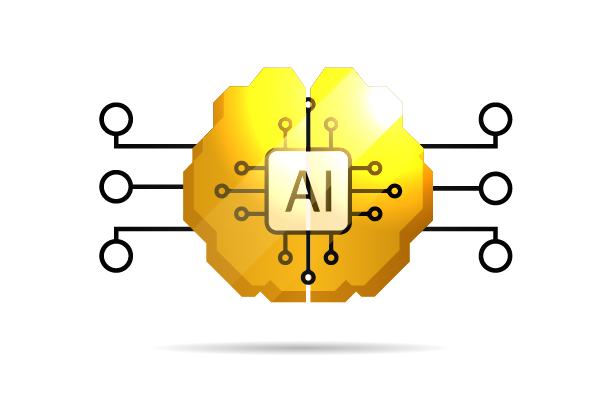
To truly answer the question, what is AI agent?, we must look under the hood. Building a reliable agent requires four fundamental components:
- The Reasoning Tool: Large Language Models like Claude or Gemini are having their roles in the architecture of AI agents. They act as a brain and do all of the reasoning, including the analysis and planning.
- The Toolset: This serves as the agent’s bridge to the outside world. Using modern open standards like the Model Context Protocol (MCP), agents can seamlessly integrate with external sources to read emails, update CRM records, or push code.
- Memory Systems: AI agents use two types of memory for handling tasks. Short-term memory helps AI agents to keep track of what they are doing right now. Long-term memory stores information from experiences, company history, and mistakes made before.
- Guardrails: An AI agent is not a perfect system. It can make errors and needs a limit to control its behaviors. To control this, a guardrail is a key feature to make it successful. It can limit what an AI agent can and cannot do.
Also Read: What Are Autonomous AI Agents? Definition, Roles, and Challenges
How Does an AI Agent Work?
To answer the question, “What is an AI agent?” you need to comprehend their workflows. Here is the breakdown of AI agent workflows:
Step 1: Receiving an Objective
The first step of AI agent workflows is receiving the goals. The goals are determined by the human, and they are commonly complex goals.
Step 2: Reasoning and Planning
The next step is reasoning and planning. In this process, an AI agent will utilize Large Language Models (LLMs) as a tool for reasoning and planning. They will make analysis, plan the suitable strategy and the suitable digital tools to use in the next process.
Step 3: Accessing Context and Memory
The agent reviews its short-term and long-term memory to understand current variables, past company rules, and historical data.
Step 4: Executing Actions
The agent actively uses software, databases, and APIs to manipulate the digital environment. It takes real actions rather than just generating text.
Step 5: Evaluation and Self-Correction
After the execution process, the AI agent can monitor the progress. If there is an error, they can correct themselves by finding other alternatives. By doing this evaluation and self-correction, AI agents will improve over time.
Step 6: Task Completion and Delivery
The final step is finalizing by delivering the result. In this step, human will take action to supervise whether it is a good result or they can instruct AI agent to find another alternatives.
AI Agents vs. AI Chatbots: Key Differences

AI Agents and AI Chatbots are not the same thing. They use AI, but they do different jobs. The table below shows the differences between AI Agents and AI Chatbots. It looks at how they work and how they are built.
Table 1. Comparison Between AI Agents and AI Chatbots
| Feature | Generative AI Chatbots | Agentic AI Agents |
| Core Purpose | Responds to queries and provides information | Achieves goals via automated workflows |
| Trigger Mechanism | Requires continuous manual prompting | Initiated once by an assigned objective |
| Autonomy Level | Low (Execution stops after output) | High (Runs loops independently until done) |
| Context & Memory | Limited to the active chat session | Persistent short and long-term memory |
| Integration Standard | Custom, siloed web searches or simple plugins | Open standards like Model Context Protocol (MCP) |
| Tool Usage | Restricted to basic text generation | Deep access to APIs, CRMs, and databases |
| Decision-Making | Recommends or suggests answers | Evaluates choices and executes actions |
| Feedback Loop | No post-generation validation | Adapts strategy based on outcomes |
| Error Handling | Frequently hallucinates when blocked | Self-corrects and tries alternative pathways |
| Governance Needs | Simple content filters and privacy moderation | Strict role-based access control and guardrails |
| Operating Cost | Low token and compute overhead | High due to constant reasoning loops |
| Business Impact | Informational helper for individual users | Operational engine that drives business ROI |
| Required Skills | Prompt engineering | Advanced software and integration engineering |
Real-World Use Cases of Agentic AI
AI agents are moving out of experimental phases and directly into enterprise workflows, driving measurable ROI.
1. Live Chat Assistant Agents
Live chat assistance is the most common implementation of AI agents on an enterprise scale. These agents talk to customers live on websites, mobile apps, or messaging platforms. They give answers to questions and help fix problems.
2. Autonomous Marketing Agents
Functioning like digital campaign managers, marketing agents take a budget and target audience, then autonomously deploy, monitor, and optimize ad campaigns minute-by-minute based on industry trends.
3. Automated Expense Auditing
Finance departments deploy agents to enforce spending policies. When an employee uploads a receipt, the agent cross-references the project code and travel policy. Compliant receipts are instantly approved, while discrepancies are flagged and routed to a human manager.
4. Banking Fraud Resolution
Instead of just declining a suspicious charge, banking agents manage the whole resolution pipeline. They can freeze the card, text the customer for verification, initiate chargebacks, close compromised accounts, and instantly issue a new digital card to the user’s mobile wallet.
Also Read: Top 10 AI Agents in Web3 to Watch in This Year
How to Deploy an AI Agent In Safe Way?
Moving an AI agent from a conceptual prototype to a reliable, enterprise-grade production system requires a strategic approach. Here is the framework for deploying an AI agent safely and effectively:
Step 1: Define Architecture and Framework
Determine if a single agent can handle the workload or if a multi-agent system is required. Choose an appropriate orchestration framework—such as LangChain for data-heavy pipelines, AutoGen for multi-agent delegation, or the OpenAI Agents SDK for tightly scoped tasks.
Step 2: Set Up Tools and Data Connections
Connect internal knowledge bases using Retrieval-Augmented Generation (RAG) and specialized vector databases. Use the MCP to standardize how the agent reads databases or triggers external software.
Step 3: Containerize and Sandbox the Environment
Never let an agent run completely unchecked on your core servers. Containerize the agent’s code using Docker. Provide a secure, capability-deprived “sandbox” environment where the agent can execute code or take actions without the risk of damaging other critical systems.
Step 4: Implement Guardrails and Human Oversight
Write explicit instructions and security classifiers to prevent unauthorized actions. For any high-risk or irreversible action (like issuing a refund or deleting a record), configure the agent to pause and route the decision through a human-in-the-loop approval process.
Step 5: Shadow Testing and Evaluation
Before going live, use a shadow deployment pattern. Route a portion of live user requests to the new agent, but do not return its output to the user. Log the agent’s reasoning and evaluate its accuracy, token costs, and error rates against your baseline metrics.
Step 6: Deploy and Monitor with LLMOps
Once validated, scale the deployment. Implement strict observability tools to trace every LLM call, monitor API costs in real-time, and catch logic loops immediately. An agent you cannot observe is an agent you cannot debug.
What Are Common Mistakes When Implementing AI Agents?

To get the most out of this technology, you need to have a plan. There are some mistakes you should watch out for when you are using an AI agent in your business. Here are things to keep in mind:
Does Not Have Clear Purpose
Using an AI agent just because it is new is not a good idea. You should always think about what problems you’re trying to solve with this technology.
Not Protecting Your Data
The AI agent is good and has many benefits, but if you give it information or do not keep it safe, you might make bad choices and get into trouble. You need to protect your data to stay away from problems.
Removing Human Involvement
As an autonomous system, an AI agent can save you time, but it is not a good idea to stop having humans check on things completely. Humans need to look at things to make sure everything is okay.
Underestimate the Integration Challenge
An AI agent needs a seamless integration to make an efficient process. Compatibility is a major thing to help this integration work properly. Watching this major factor is important.
Also Read: Top 10 AI-Powered Trading Solutions for Active Traders In This Year
What Are the Key Benefits of Using an AI Agent?
An AI agent has been designed as a tool to help humans complete their tasks. So, it has many benefits for humans’ daily lives or even in business. Check what the benefits of AI agents are in the explanation below:
- Autonomous Problem Solving: The agents break down big problems into simple steps that they can do. They autonomously solve the problem with their own capabilities.
- Massive Scalability: The agents can look at a lot of contracts and answer many customer questions at the same time. They can do this without getting tired. This ability truly overpowers humans’ skills.
- Cost Efficiency: The agents do tasks that people have to do over and over, which takes a lot of time. This helps save money and lets people do important work.
- Improvement: The agents can fix their own mistakes, so they get better at what they do over time. The agents keep getting more accurate because they can correct themselves.
What Are the Biggest Limitations of AI Agents?
Although AI agents have great potential, businesses need to be aware of some important risks:
- Reliability Issue: AI agents use language models to get information, but sometimes they give false information.
- Security Problems: If AI agents are connected to systems, they can be attacked or changed without permission, so they need good security.
- Cost Is High: Running AI agents all the time needs a lot of computer power and money, so it is better for companies than small businesses to use AI agents.
Conclusion
The way we interact with artificial intelligence is changing fast. Generative AI opened the door, but now agentic AI is really shaking up how businesses operate. To truly get what an AI agent is, you have to look deeper than just a basic definition. It’s about understanding how it’s made, how it can think and act on its own, and where it has boundaries. Learning to use this technology effectively today is essential for success in the future of working alongside AI.
Frequently Asked Questions
What is an AI agent?
An AI agent is an autonomous, goal-oriented program that independently strategizes and executes complex tasks once a human assigns an overarching objective.
Will AI agents replace human workers?
Rather than completely replacing humans, AI agents act as highly capable digital assistants that handle routine execution while human workers focus on oversight and strategy.
How do AI agents work?
AI agents operate on a continuous loop by analyzing an objective, formulating a plan with an LLM, taking action via digital tools, and self-correcting until the goal is met.
What can they actually do?
Acting as autonomous digital coworkers, they can independently execute multi-step workflows like patching software bugs or processing customer refunds through a CRM.
What are the main risks?
Because they operate independently, a poorly configured AI agent’s mistakes carry real-world consequences, such as accidentally altering vital databases or generating high computing costs if trapped in an error loop.
Disclaimer: The information provided by Snap Innovations in this article is intended for general informational purposes and does not reflect the company’s opinion. It is not intended as investment advice or recommendations. Readers are strongly advised to conduct their own thorough research and consult with a qualified financial advisor before making any financial decisions.

Tegar Rahman Hidayah is a writer focusing on financial and artificial intelligence topics. His work ranges across various topics such as cryptocurrency, blockchain, artificial intelligence, trading technology, and financial technology solutions. His work targets the audience to understand more about AI-driven trading technology, blockchain, and solving the financial technology problems by providing solutions. By combining in-depth research with accessible narratives, he delivers insights that are both informative and engaging for a wide range of audiences.