
What Is a Multi-Agent System in AI? Types, Benefits, and Examples
A multi-agent system in AI is an architecture where two or more AI agents, each with its own role, tools, and goals, coordinate to complete a task that a single agent would handle worse, slower, or not at all. Instead of one model doing everything, the work is split across specialized agents that communicate and share state, often under a coordinator that assigns and combines their work.
The idea is old, rooted in distributed AI, but it has surged in 2026 as large language model agents made specialized, collaborating agents practical to build. A multi-agent system can research a topic across many sources in parallel, break a complex workflow into expert steps, or have agents critique each other’s output. It is powerful, but not a default. Multiple agents add real cost and complexity, and in many cases a single well-designed agent still wins. This guide explains how these systems work, their main types, and when they are genuinely worth it.
What Is a Multi-Agent System in AI?
A multi-agent system (MAS) is a system composed of multiple autonomous agents that interact within a shared environment to achieve individual or collective goals.
Each agent is autonomous, meaning it can perceive its context, make decisions, and act without step-by-step human control. In modern practice, each agent is typically a language model running in a loop with its own prompt, memory, and set of tools. What turns a group of agents into a system is coordination: they communicate, share information, and align their actions toward a goal.
The classic concept comes from distributed AI, where agents could cooperate or even compete, and useful behavior emerged from their interaction. The 2026 version applies that same principle to LLM agents, assigning each one a distinct role so the group can tackle problems that overwhelm a single model.
How Does a Multi-Agent System Work?
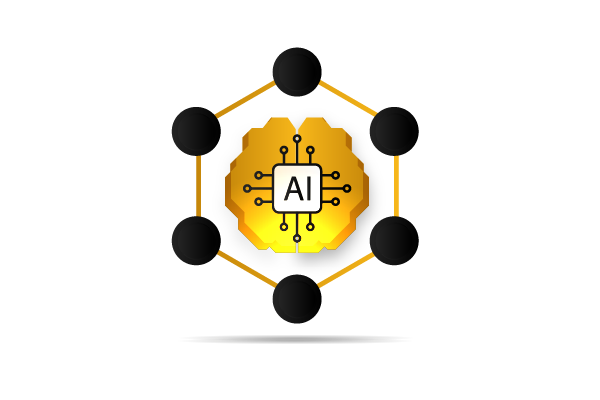 A multi-agent system works by dividing a large task among specialized agents and coordinating their outputs into a coherent result. A few core components make that possible.
- Agents: the individual workers, each with a defined role, instructions, tools, and sometimes a different underlying model tier.
- Orchestrator or coordinator: in most designs, a controlling layer that decomposes the task, routes sub-tasks to the right agent, and aggregates results.
- Communication protocol: the shared language and message format agents use to pass information, increasingly built on emerging standards like Agent2Agent (A2A) and the Model Context Protocol (MCP).
- Shared state or memory: a common workspace that lets agents build on each other’s work rather than starting from scratch.
- Environment: the systems, data, and tools the agents act on, such as APIs, databases, or the web.
In a typical run, a coordinator receives a goal, breaks it into sub-tasks, and hands each to a suitable agent. Those agents work, sometimes in parallel, and return results that are checked and combined. The key point is that coordination is the hard part. The intelligence of individual agents matters less than how well they are organized to work together.
Also Read: What Are Autonomous AI Agents? Definition, Roles, and Challenges
What Are the Main Types of Multi-Agent Architectures?
Multi-agent systems are usually organized into a few coordination topologies. Each defines who is in charge and how agents relate to one another.
| Topology | How It Works | Common Use |
| Orchestrator-worker | A central orchestrator decomposes tasks and delegates to worker agents | The most common pattern in production |
| Supervisor / hierarchical | A coordinator manages sub-managers, forming a tree of control | Complex workflows with layered decisions |
| Swarm / decentralized | Peer agents coordinate directly with no central controller | Resilient, emergent, distributed tasks |
Academics describe the same landscape as centralized, decentralized, and hierarchical coordination, sometimes with a dynamic layer that adapts the structure at runtime. In practice, the orchestrator-worker pattern dominates, accounting for a large majority of production deployments, because a single point of control is easier to reason about and debug.
The takeaway is that the right topology depends on how much central control the task needs. More coordination adds structure but also overhead.
What Are the Common Orchestration Patterns?
 Within those topologies, agents can be arranged in several execution patterns, and real systems often combine them.
- Sequential: agents run in a fixed chain, each processing the previous one’s output, ideal for staged pipelines like parse, extract, validate, summarize.
- Parallel or concurrent: multiple agents work at the same time on independent sub-tasks, then results are merged, which speeds up research and broad search.
- Handoff: one agent passes control to another better suited to the next step, common in routing and support.
- Group chat or debate: agents discuss or critique a problem together to reach a better answer.
- Hierarchical: a manager agent plans and delegates to workers, then reviews their results.
The key point is to match the pattern to the task’s structure. A linear document workflow suits a sequential chain, while broad information gathering suits parallel agents.
Single-Agent vs Multi-Agent: When Do You Actually Need Multiple Agents?
This is the most important and most overlooked question. Multi-agent systems are not automatically better, and in 2026 the honest economics are well documented.
Coordination is expensive. Research shows that independent multi-agent setups typically add around 58 percent extra token cost, while centralized ones can add roughly 285 percent, because the orchestrator makes extra calls to decompose tasks and combine results. Costs can scale alarmingly: a workflow that costs pennies in testing can reach tens of thousands of dollars a month at high volume. Orchestrators also accumulate context from every worker, so beyond about four workers the shared context can exceed the model’s window.
There is also evidence that more agents do not always mean better reasoning. A 2026 study found that single-agent models can outperform multi-agent systems on multi-hop reasoning when both are given the same thinking budget, and multi-agent debate can suffer from sycophancy, where agents agree with the majority even when it is wrong, producing confident but false consensus.
So when should you use multiple agents? A multi-agent system pays off when a task genuinely benefits from:
- Specialization, where distinct expertise or tool sets matter
- Parallelism, where independent sub-tasks can run at once
- Critique, where separate agents check or challenge each other’s work
If none of those apply, a single agent with good prompts and tools is usually cheaper, faster, and easier to maintain. The bottom line: reach for multi-agent by necessity, not by default.
What Are the Benefits of Multi-Agent Systems?
 When the task fits, multi-agent systems offer real advantages over a single monolithic agent.
- Specialization. Each agent can be tuned for one job, with its own prompt, tools, and model tier, improving quality on domain-specific work.
- Parallelism and speed. Independent agents working at once can complete broad tasks far faster than a single sequential process.
- Scalability and modularity. New capabilities can be added as new agents without rebuilding the whole system.
- Fault tolerance. In decentralized designs, the failure of one agent does not necessarily stop the system.
- Better complex reasoning. Dividing a hard problem into focused roles can produce a more thorough result than one agent juggling everything.
The takeaway is that multi-agent design shines on large, divisible, or specialized problems where one agent would become a bottleneck.
What Are the Challenges and Risks?
The same coordination that gives multi-agent systems their power also creates their hardest problems.
- Cost and token overhead. Every coordinating call adds expense, and costs can explode at scale.
- Context limits. Orchestrators that gather output from many workers can overflow the context window.
- Coordination failures. Most multi-agent failures are architectural, stemming from ambiguity, miscoordination, and unpredictable dynamics rather than a weak model.
- False consensus. Debating agents can cascade toward agreement, reinforcing a wrong answer.
- Debugging difficulty. Non-deterministic, multi-step interactions are hard to reproduce and trace, which is why observability tooling is essential.
Understanding these risks helps teams decide when the added power justifies the added complexity.
What Are Real-World Examples of Multi-Agent Systems?
Multi-agent systems already run in production across many domains:
- Research assistants that dispatch parallel agents to gather and synthesize information from many sources.
- Software engineering systems where planner, coder, and reviewer agents collaborate on a codebase.
- Customer service that routes each query to a specialized agent through handoffs.
- Document and contract processing, where separate agents handle template selection, clause customization, compliance review, and risk assessment in sequence.
- Supply chain and logistics, where agents representing different functions negotiate and coordinate decisions.
These examples share a trait: the work is naturally divisible into specialized roles, which is exactly where multi-agent design earns its cost.
Also Read: Top 10 AI Driven Cryptocurrencies to Consider this Year
What Are the Popular Multi-Agent Frameworks?
Several frameworks make building multi-agent systems easier, each with a different design philosophy:
- LangGraph for graph-based, stateful control over agent workflows.
- CrewAI for role-based orchestrator-worker crews with sequential and hierarchical processes.
- Microsoft Agent Framework (the successor to AutoGen) for conversational and enterprise-grade multi-agent orchestration.
- OpenAI Agents SDK for handoffs and tool-driven agent coordination.
- Anthropic’s Agent SDK with context-isolated sub-agents and native MCP support.
The right choice depends on how much control, observability, and state management your system needs. The framework often determines what you can build and debug quickly.
Key Takeaways
A multi-agent system in AI coordinates several specialized agents to solve problems that a single agent would struggle with. Its components, the agents, an orchestrator, a communication protocol, and shared state, work together so the group can divide labor, run in parallel, and check each other’s work.
The field has matured into clear topologies and patterns, from orchestrator-worker to swarm and from sequential chains to agent debate. But the most important lesson of 2026 is restraint. Multi-agent systems add real cost and complexity, and evidence shows a single agent often wins when the task does not truly need specialization, parallelism, or critique.
Treat multi-agent design as a deliberate architectural choice, not a default. Match the topology and pattern to the shape of your problem, invest in observability and coordination, and use multiple agents only where they clearly earn their keep.
Frequently Asked Questions
What is a multi-agent system in AI in simple terms?
It is a setup where several AI agents, each with its own role and tools, work together to solve a task. They communicate and coordinate, usually under a controller that splits the work and combines the results, so the group can handle problems too big for one agent.
What is the difference between a single-agent and a multi-agent system?
A single-agent system uses one agent to handle the whole task, while a multi-agent system splits the work across several specialized agents. Multi-agent adds specialization and parallelism but also cost and coordination overhead, so it is worth it only when the task genuinely benefits.
What are the main types of multi-agent systems?
The dominant coordination topologies are orchestrator-worker, where a central agent delegates to workers, supervisor or hierarchical, where control is layered, and swarm or decentralized, where peer agents coordinate without a central controller. Orchestrator-worker is the most common in production.
When should you use a multi-agent system?
Use one when a task benefits from specialization, parallelism, or agents critiquing each other’s work. If the task is straightforward, a single well-designed agent is usually cheaper, faster, and easier to maintain.
What are the disadvantages of multi-agent systems?
The main drawbacks are higher token cost, context-window limits when orchestrators gather too much output, coordination failures, the risk of false consensus among agents, and the difficulty of debugging non-deterministic behavior.
What frameworks are used to build multi-agent systems?
Common frameworks include LangGraph, CrewAI, the Microsoft Agent Framework, the OpenAI Agents SDK, and Anthropic’s Agent SDK. Each offers different approaches to orchestration, state management, and observability.
Disclaimer: The information provided by Snap Innovations in this article is intended for general informational purposes and does not reflect the company’s opinion. It is not intended as investment advice or recommendations. Readers are strongly advised to conduct their own thorough research and consult with a qualified financial advisor before making any financial decisions.

Joshua Soriano
I’m Joshua Soriano, a technology specialist focused on AI, blockchain innovation, and fintech solutions. Over the years, I’ve dedicated my career to building intelligent systems that improve how data is processed, how financial markets operate, and how digital ecosystems scale securely.
My work spans across developing AI-driven trading technologies, designing blockchain architectures, and creating custom fintech platforms for institutions and professional traders. I’m passionate about solving complex technical problems from optimizing trading performance to implementing decentralized infrastructures that enhance transparency and trust.