
Technological progress develops through two distinct operational mechanisms that govern how scientific discoveries transition into institutional practice. Understanding this progression requires analyzing both the initial synthesis of technical novelty and its subsequent integration into broader economic systems.
The difference between innovation vs invention lies in the boundary between scientific origination and systemic adoption. Invention refers specifically to the first physical or conceptual creation of a novel device, process, or theory. Innovation represents the subsequent iterative process, adapting that initial artifact so it functions efficiently within established market parameters and social frameworks. Understanding the debate about innovation vs invention is essential for anyone doing business.
Below, this article defines the concept of innovation vs invention. Starting from explain their fundamental structural distinctions, evaluates historical case studies as examples, and investigates the primary economic and institutional factors that stimulate both activities.
What is Innovation?

Innovation is defined as the process through which novel concepts are applied to generate empirical utility within an established system. Distinct from basic research or invention, it emphasizes implementation, transforming conceptual designs into functional modifications that optimize efficiency and performance.
Systemically, innovation modifies diverse operational structures, including administrative workflows, business models, and service delivery channels. This continuous adaptation enables organizations to realign internal resource distribution with shifting external market inputs and environmental demands.
The generation of actionable innovation relies on distributed knowledge networks. By integrating heterogeneous perspectives and cross-disciplinary data, institutions can accelerate problem identification and increase the durability of newly deployed operational strategies.
What is Invention?

Invention represents the origination point of novel intellectual property and technological capabilities. Unlike incremental product enhancements, it involves synthesizing technical expertise to engineer a mechanism, process, or device with no direct market predecessor.
The research and development lifecycle behind a true invention carries inherent technical uncertainty and risk. Engineering teams must manage high iteration failure rates and unproven hypotheses, relying on structured experimentation to convert theoretical concepts into functional, patentable assets.
In the end, an effective invention broadens a company’s core technological base. Developing a proof-of-concept for an innovative capability results in a fundamental resource that entities can secure, market, and expand in international markets.
Also Read: What is SaaS Trading Solutions? The Future of Trading
Comparisons Table: Invention vs. Innovation
To see how these two ideas actually complement each other, here is a side-by-side comparison of invention and innovation.
| Feature | Invention | Innovation |
| Definition | The creation of a brand new product, concept, or method that did not previously exist. | The improvement, adaptation, or practical commercialization of an existing idea or product. |
| Primary Focus | Novelty, originality, discovery, and solving a fundamental problem. | Practicality, marketability, user experience, and continuous value creation. |
| Process Drivers | Fueled by curiosity, theoretical exploration, and scientific or engineering research. | Fueled by market needs, customer feedback, efficiency goals, and competitive trends. |
| Outcome | A unique prototype, patent, or a completely new foundational concept. | An enhanced product, service, or business model that achieves widespread adoption. |
| Risk & Timeline | Extremely high risk with a long, uncertain timeline to realization. | Moderate to high risk, usually with a faster timeline driven by market demand. |
Why They Matter
Invention and innovation are not only meaningless words; they also have important roles in the various aspects of human life. Understanding their importance is essential to gain success in the future. Below is the explanation about why the innovation and invention matter:
- Driving Market Expansion: Inventions are responsible for establishing entirely new commercial sectors, whereas innovation optimizes the operations and output of existing firms. This combined dynamic accelerates job creation, attracts institutional capital, and ultimately strengthens national economic performance.
- Solving Major Global Problems: The world faces severe challenges like climate change, health emergencies, and resource shortages. Inventions deliver the necessary scientific discoveries to solve these issues. Innovation then takes over, making those discoveries affordable, scalable, and ready for public use.
- Elevating Quality of Life and Standard of Living: From life-saving medical devices to daily conveniences like refrigeration and mobile communications, the pairing of invention and innovation directly reduces human suffering, saves time, increases safety, and enriches life experiences.
- Ensuring Survival in a Changing World: For businesses and institutions, standing still is equivalent to falling behind. Organizations that cultivate both invention and innovation build the resilience required to navigate economic disruptions and shifting market demands.
What Factors that Push Innovation and Invention?
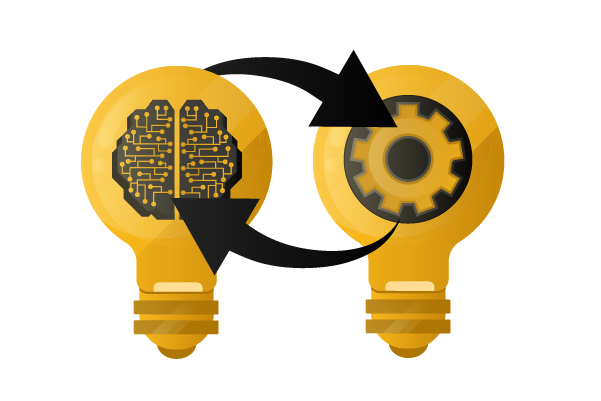
The continuous cycle of creating and improving does not happen in a vacuum. Several distinct factors push the boundaries of both innovation and invention forward:
- Market Demand and Consumer Needs
- Technological Advancements
- Economic Competition
- Curiosity and Human Ingenuity
- Regulatory and Environmental Changes
Also Read: Commodities Technology: Innovations in Trading and Management
Examples of Innovation in Financial Technology
Conversely, FinTech is largely driven by innovations that refine and adapt these foundational inventions for better market fit:
- Mobile Banking Applications: Mobile apps didn’t invent banking; rather, they innovated the delivery of banking services by making them seamlessly accessible via smartphones.
- Robo-Advisors: Taking the established practice of wealth management and innovating it with algorithms to automate portfolio building. This innovation made financial planning cheaper and accessible to the masses.
- Contactless Payments (NFC): An innovation built on top of the existing credit card and digital payment infrastructure. By utilizing Near Field Communication, it solved the market’s need for faster, friction-free transactions at the checkout counter.
- Peer-to-Peer (P2P) Lending Platforms: These platforms innovated the ancient practice of borrowing and lending by bypassing traditional banks, using digital networks to seamlessly connect individual borrowers directly with individual investors.
- Buy Now, Pay Later (BNPL): This model innovated traditional layaway and installment loans by integrating them seamlessly into the digital checkout process, providing consumers with instant, short-term financing exactly at the point of sale.
- Open Banking via APIs: This innovation transformed how financial data is shared. By using Application Programming Interfaces (APIs), it securely connects traditional bank accounts with third-party FinTech apps, giving users centralized control over their holistic financial lives.
Examples of Invention in Financial Technology
To contextualize these concepts in the modern world, the financial technology (FinTech) sector offers vivid examples of fundamental inventions that reshaped the industry:
- The Automated Teller Machine (ATM): Introduced in the late 1960s, the ATM was a groundbreaking invention that created a fundamentally new way for consumers to access cash and perform banking transactions outside of standard branch hours.
- Blockchain Technology: The underlying cryptographic ledger system invented to support Bitcoin. It introduced a completely unprecedented method of decentralized trust, security, and digital record-keeping without a central authority.
- The Credit Card: The creation of the universal credit card was a novel concept that allowed consumers to defer payment across multiple, unaffiliated merchants using a single piece of plastic, replacing isolated store-credit systems.
- Public-Key Cryptography: The mathematical foundation created in the 1970s that allows secure digital communication. While not exclusively financial, this invention is the bedrock that makes all secure online banking, e-commerce, and digital signatures possible today.
- Electronic Funds Transfer (EFT): The foundational system that first allowed money to be moved electronically between accounts without the physical exchange of paper money or checks, fundamentally changing the speed of global commerce.
- Smart Contracts: Originally conceptualized in the 1990s, this is the invention of self-executing digital contracts where the terms of the agreement are directly written into code, eliminating the need for intermediaries to enforce agreements.
Also Read: Trading Technology: Revolutionizing Financial Markets
Conclusion
Navigating the dynamic of innovation vs invention is critical for modern enterprises, as organizations that merely invent often struggle to translate their novelty into practical utility. The boundary between originating a concept and commercializing it dictates long-term market leadership. While true invention requires a tolerance for high failure rates and unproven hypotheses, it only becomes economically viable when innovation steps in. This secondary phase refines, scales, and distributes the raw technology, ensuring that an isolated prototype transforms into a product that addresses concrete consumer friction.
Therefore, corporate longevity depends on institutionalizing both disciplines. Leaders must allocate resources toward high-risk, conceptual development while maintaining the operational agility to adapt those breakthroughs for everyday use. Striking this strategic balance ensures that technological milestones do not just sit dormant in patent portfolios, but actively generate revenue, drive industry evolution, and secure competitive advantage.
Frequently Asked Questions
What is the main difference between innovation and invention?
Invention is the creation of a brand-new concept, product, or methodology that did not previously exist. Innovation, on the other hand, is the practical improvement, adaptation, and commercialization of an existing idea to bring value to a market.
Can innovation exist without a new invention?
Yes. Innovation often involves improving existing processes, refining business models, or combining existing tools in a new way without requiring a newly patented or fundamentally novel invention.
Why do many inventions fail to become innovations?
Many inventions fail to innovate because they remain purely theoretical. Other reasons also prove too costly to manufacture or simply fail to find a good market demand’s practical application.
How does technology drive both processes?
Technology provides both the scientific tools to discover novel concepts for driving invention. To drive an innovation, the platforms necessary to scale, distribute, and refine those concepts for mass consumption.
Who plays a bigger role in economic growth: the inventor or the innovator?
Both are deeply crucial and interdependent. The inventor lays the groundbreaking foundation, while the innovator refines the idea and drives widespread economic adoption.
Is the modern smartphone an invention or an innovation?
While the very first cellular phone was an invention, modern smartphones (like the iPhone) are profound innovations. They brilliantly combined existing technologies (touchscreens, internet capability, mobile communication) into a highly user-friendly package.
How can an organization foster a culture of innovation and invention?
Organizations can build this culture by encouraging curiosity, destigmatizing failure, investing heavily in research and development, and maintaining a high sensitivity to customer feedback and emerging market trends.
